
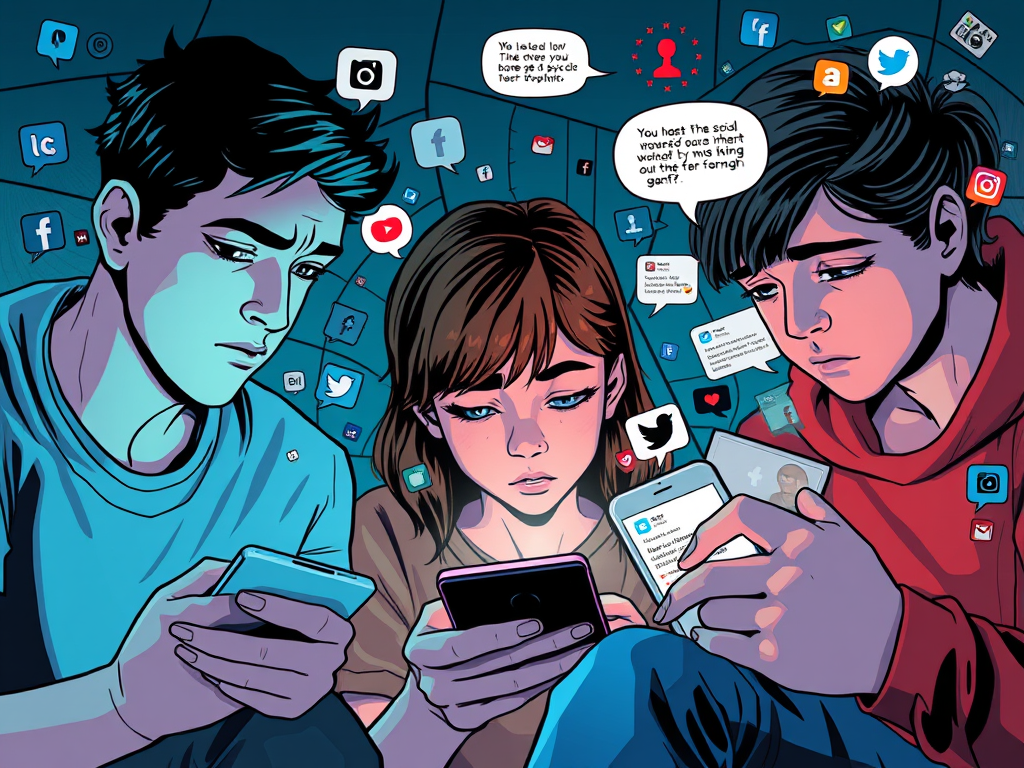
If you ask Gen X how it was before Social Media, they will have much to say. Everyone has their own opinion, but we can still appreciate others’ points of view and learn something from them. I have heard many older people say that when they were teenagers, they had real social connections. They believe today’s youth have many online connections. Our target audience for this post is teenagers or Gen Z. Still, it can be helpful to anyone addicted to social media. We are all vulnerable to the digital world. I am a millennial, and sometimes I find it difficult to put my phone down.
Social media platforms like Twitter, Facebook, Instagram, YouTube, Snapchat, and TikTok are very popular among teenagers. They know how this technology works sometimes better than their caregivers. They use social media to talk to their friends. They also learn new technologies and look for their favorite recipes. They post their pictures and videos.
Yet, social media offers teenagers many advantages. They use it to find information quickly. They stay connected with friends and family. They also use it for school assignments. Social media can be a powerful weapon in the right hands. Teenagers can gain in many ways by using social media responsibly. Young people keep relationships with their families and friends. Also, using social media can help teens connect with people worldwide. It allows them to learn about different cultures. They can also discover various ways of life. Moreover, they can keep themselves informed. Social media makes it much easier to keep up with the latest news and happenings. It also gives them an infinite number of opportunities for amusement. Given these benefits, it would be difficult for teenagers to remove their social media accounts. For example, asking your kids to delete their accounts is like asking them to erase their connection. It’s like erasing their connection to other people’s lives. If they are content creators, you’re forcing them to erase their identity online. This erases what they represent, which is just an invention. They may resist giving up their accounts even if they’re bullied. We can see how critical social media is to teenagers’ lives. Irresponsible use by teenagers is the root cause of its adverse effects. They need some coaching to cope with the daily online pressure and to cure their social media addiction.
The Dark Side Of Social Media
Social media can cause mental health problems like depression and anxiety. These issues arise due to cyberbullying, fear of missing out (FOMO), and comparison. Thanks to the emergence of digital media, we are not only consumers of content. We are also creators. Many teenagers have accounts where they post blogs, videos, and pictures. They also comment on others’ posts. Most of the time, they hope for positive feedback, such as likes, comments, views, and shares. They believe the success of their post depends on the algorithm. They use certain keywords and hashtags to reach a specific audience. However, many factors can disappoint teenagers; their posts do not receive enough views, they do not get enough likes, or they get many negative comments from bullies (cyberbullying). Some kids used to deal with hurtful words in school; now they have to deal with nasty comments on social networks. Some teens have killed themselves after being bullied on social media. These bullies are not talking face-to-face with the victims; therefore, they can say the most horrible things under their posts. I am a social media influencer, and I get hurt by some awful words before, but I also knew it would happen once I put myself out there. So, if you are reading this book and you’re experiencing bullying, I want you to know that you are not alone. There is hope in the darkness; it might just take some time, but at the end of the day, you’re going to be ok. Stay with us. Try to talk about it. I always feel better when I do so; maybe you will too.
As a teenager, I also had social media; however, I started to be active on some platforms in 2019, when I was 27. I grew up in Haiti, where access to the internet and computers was not always possible. This may explain why I did not use some popular platforms that much. It was challenging to deal with what people said about me. It’s either my look or the quality of my work. Don’t get me wrong, some constructive comments are helpful, but some are very hurtful. They make you question who you are, your life, and everything about yourself. When they sleep in bed, they wake up with ruminative thoughts. I know that I am not the only one. We will devise some techniques to help us cope with this situation. There is always a way.
In addition to dealing with bullies, teenagers experience the fear of missing out (FOMO). They must constantly stayup to date on what is happening, what their friends are doing, etc. FOMO can also mean they feel like other people on social media are doing better than they are. They need to know what is happening in other people’s lives, which explains why they cannot delete their accounts. Sometimes they feel left out when they see their friends hanging out with other friends.
Teenagers often compare themselves to celebrities, peers, and favorite influencers. The unrealistic expectation on social media is that the guys would have a V-shaped body and the girls would have wide hips/narrow waist, but this is just a stereotype. Other than body image, there is the financial aspect of the comparison—many times, they might see some of their peers with expensive stuff on social media, and they feel sad when it is something they cannot afford. They need to see these instances from a different perspective; not everything you see on social media is real, and many people lie about their lives for attention or to make others jealous.
Social media can affect the physical health and the well-being of teenagers. To begin with, when they don’t eat enough because they don’t want to gain weight due to unrealistic expectations on social media, the need to compare their bodies to their peers’ or celebrities’ generates poor eating habits. Megan Moreno, an associate professor of Pediatrics at the University of Washington, examined how social media may contribute to the prolonged illness course of eating disorders in a session titled #Selfie esteem: Social media’s influence on adolescent body image and eating disorders. They ignore that many influencers do not post their authentic self on social media; they post the best version of themselves to attract viewers whom they can turn into followers. One more health-related issue is that binge-watching videos can encourage obesity. According to Pavlik and McIntosh, some other adverse health effects have been associated with binge-watching, such as obesity. Although more research needs to be done regarding all of those health issues, parents need to be cautious about the negative impacts social media can have on their adolescents’ health, especially those who are not happy with their appearance.
Furthermore, time spent on social media can affect their education. Many teenagers forget about their responsibilities when they are on their smartphones. One of the problems they face is procrastination; they have a lot to get done for school, but they can’t stop using social media. Salzgeber, in his book, defines procrastination as “the act of delaying or putting off something that should be done. The crucial ingredient in procrastination is the irrationality of the delay. We know delaying a specific task isn’t good for us, but we do it anyway. Unsurprisingly, this is the case for many college-teenage boys and teenage girls; they often procrastinate. They also rely on social media for information, with little effort to memorize and analyze its content. They need to know that some influencers give false information to generate views. “In the book The Dumbest Generation, Emory University English professor Mark Bauerlein chronicles case after case and numerous studies that indicate American teens and young adults today demonstrate a worrisome lack of intellectual curiosity and a dearth of knowledge about the world in general. In addition, many scholars argue that today’s young people are more ignorant than ever about politics or history. They feel they do not need to remember information because they can always find it online. This evidence demonstrates the need to control the social networks epidemic. Parents, schools, and the government need to investigate the adverse effects of social media on these teenagers’ education because they are the future of this country.
One more issue to consider is the fact that many influencers can manipulate these adolescents into practicing dangerous trends like using drugs, doing something that can hurt their health. For example, one little girl died after participating in a Scarf Game, also known as “Blackout Challenge” on TikTok. In this dangerous trend, the content creators intentionally block their oxygen supply by using a scarf or a belt, which leads some individuals to lose their lives due to asphyxiation. One may argue that they can learn a lot from credible influencers, but that is not always the case; you might say they can choose not to do what they see on social media, but Psychology proves otherwise. According to William Cooper, one of the weapons of influence is authority; generally, we tend to obey orders from an authoritative person in a particular field. He added that a persuader could display his diplomas or academic titles on his office wall so that people can believe in his actions. This evidence demonstrates how difficult it can be for an adolescent not to listen to some bad influencers. A professor of Psychology, Robert Cialdini, talks about the term “social proof, which shows that when people are uncertain, they are more likely to use others’ actions to decide how they should act. He also talks about similarities, where we tend to do something that people who look like us do. This affirms that teenagers might follow the same trends as their peers; they can say, “If many of my classmates are doing it, that must be right.”
Finally, many young people lose their connection to the real world due to constant social media use. They barely have face-to-face interactions with their friends or extended family. Even when they spend time together, they are all on their smartphones. According to Professor Sherry Turkle, technology has separated us from one another. He mentions that it creates the illusion of greater connection and communication, but makes us emotionally lazy and easily disengage from relationships. These statements demonstrate how today’s teenagers are socially disconnected. They call someone they have never seen “friend” in person, like Facebook friends, Instagram friends, TikTok friends, etc. One dangerous aspect is catfishing (when someone uses a fake profile picture to pass for someone else). These teenagers might feel let down. They realize the person they have been talking to for months or years is not who they thought.
Many kids are exposed to pornography because of social media. According to a study from the Journal of Adolescent Health, approximately 1 in 5 youth experience unwanted online exposure to sexually explicit material, and 1 in 9 experience online sexual solicitation. Many predators would send their private parts to some young kids, which is sick for an adult to do. If you have been in a situation like that, talk to someone about it. You need some help. You are just a kid with a phone and don’t deserve that. Sexual content can have a significant effect on adolescent mental health, and social media makes it easier for adolescents to have access to this kind of content.

 JD Life Coaching
Leave a comment